


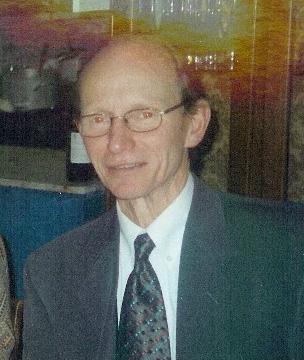
Ragnvald Høier was born 30. November 1938, in Skien in Norway. He entered the University of Oslo (UiO) in 1957 and received his MSc degree (cand. real) in 1965; the thesis work was on X-ray diffraction, supervised by Jon Gjønnes. In 1966, after military service, Ragnvald became a research fellow (vit. ass.) in the solid state group at the Physics department, UiO. Working again with professor Gjønnes, he soon assumed a key role in establishing the electron microscopy laboratory in the Physics Department. Ragnvald was an enthusiastic and thorough experimentalist, at the same time acquiring a profound understanding of the theoretical background in electron diffraction. His PhD thesis from 1973 entitled “Investigation of many-beam dynamical diffraction effects in Kikuchi line patterns” reflects his interests and a keen grasp of the field. It can be read even today with great interest by electron diffraction specialists. His treatment of dynamical effects governed by a few main beams is basic to the current field of convergent beam electron diffraction (CBED); the treatment of the interplay between multiple diffuse scattering and dynamical diffraction effects stands out as an ingenious effort in an intricate field. During his studies Ragnvald was socially active towards fellow students, took active part in sports activities (both handball and football) and engaged himself in student political issues. He was also an early participant in international microscopy meetings.
Ragnvald joined the Norwegian Technical University (NTH) in Trondheim (it was renamed as the Norwegian University of Science and Technology (NTNU) in 1996) as a lecturer in 1972, and worked there, as a professor from 1983, until his retirement because of illness in 2003. In Trondheim, Ragnvald took interest on X-ray diffraction and many-beam diffraction theory. During the eighties he gradually moved back to his “roots” and electron diffraction and microscopy.
In 1987/1988 Ragnvald together with two colleagues in the Physics department at NTNU established a new SINTEF division, SINTEF Applied Physics. SINTEF, the Foundation for Industrial and Technical Research at NTH, is one of the largest independent research organisations in Europe, which was originally established to perform industrial contract work at the former NTH. The objective in creating a new SINTEF division was to create a bridge between fundamental physics and applied science by taking on research projects of fundamental character, but with relevance and use for Norwegian industry, especially in the light metals industry (in particular Hydro Al), which has been an important sponsor for the TEM activity at NTNU/SINTEF through several decades. By this, he founded a large, well working and robust research group in electron microscopy and applied physics, which would otherwise not be possible at NTNU.
In the years 1987/1988 Ragnvald also made another important move in his scientific career, by spending a one-year sabbatical visit to Professor John Spence and the National Science Foundation’s Center for High Resolution Electron Microscopy at the Arizona State University (ASU). At ASU, he worked with Jian Min Zuo on three beam diffraction effects in CBED and their use for structure factor phase measurement. His enthusiasm and insight led to the development of CBED as the most accurate technique for measuring the structure factor phase in acentric crystals. A common theme through Ragnvald’s scientific career has been diffraction theory, electron crystallography and multiple beam effects. In this way he followed up on a long and strong tradition in Norway, which has its base with Professor Jon Gjønnes and the electron microscopy group at UiO.
The TEM group at NTNU/SINTEF expanded extensively during the nineties under Ragnvald’s leadership. Broad collaborations were established with groups outside the Physics department, including metallurgy, inorganic chemistry and physical metallurgy, and with Norwegian industry. He engaged himself in a variety of materials problems where transmission electron microscopy was useful and of great benefit, and a considerable number of PhD students and post doctoral researchers got their education and training with Ragnvald during this period. At the same time, Ragnvald took the initiative to introduce atomistic modelling to the TEM group at NTNU. This has proven to be a very valuable asset and represent today an important supplement to the experimental electron crystallography activity in the group. The legacy of Ragnvald’s effort is a robust research group in transmission electron microscopy at NTNU with a strong collaboration with SINTEF. Today the group has activities in several directions, including precipitation in Al alloys, quantitative STEM, nanorods, EELS and electronic structure and Si solar cell materials.
During his academic career Ragnvald was also known for his public service. He took active part in administrative duties. At NTNU he served several terms as the Department Head, and he also served on a large number of boards and committees at the University and with the Research Council of Norway.
Among students and former PhD candidates Ragnvald will be remembered as an excellent lecturer and supervisor. He was genuinely interested in teaching; he put a lot of energy and time into preparations of his lectures and made teaching as good as possible. He really cared for his students and colleagues, both professionally and personally, and he was always willing and enthusiastic about helping and explaining difficult problems. He was a kind and pleasant person and a true team player.
To remember Ragnvald and value his contributions to the field of electron microscopy, we cite and conclude with kind messages that we received from many friends and colleagues in the international microscopy community:
From Chalmers, Sweden, Eva Olsson wrote: ‘We here at Chalmers remember Ragnvald’s good spirit and enthusiasm in sharing his knowledge in electron microscopy and in electron diffraction in particular. It was always a joy to meet him and I have many bright memories from our discussions. He is missed both as a good friend and also as a colleague and a well renowned and leading scientist.’ Sven Hovmöller and his colleagues in Stockholm sent their kind regards. Christian Colliex, of Paris, France, wrote ‘This is truly sad news to read about the decease of Ragnvald. He was a great figure in our world of microscopists. Receive, all of you in Trondheim, his closest colleagues and friends, my warmest regards.’
Colin Humphreys from Cambridge University, UK, sent a greeting all of us agreed to: ‘Ragnvald was a wonderful person, and he did so much for electron microscopy. It was always a pleasure to meet him and talk with him. He had a deep understanding of electron diffraction theory, electron microscopy and also applications to Materials Science. There are not many people around who combine all of this expertise. He will be greatly missed. Ragnvald was a world leader in his fields.’ John Spence wrote: ‘Ragnvald taught us all a great deal, and was a true gentleman with a generous nature and a deep understanding of his subject’.
Ragnvald Høier died October 23, 2009, after a long battle with illness. He leaves behind his wife Aud and two sons with families. It is an outstanding scientist and teacher who has now passed away. He has meant a lot for the development of electron microscopy and crystallography in Norway. He is remembered by all of us.
Jon Gjønnes, professor Emeritus, University of Oslo, Norway
Jian-Min Zuo, Associate Professor, University of Illinois, Urbana Champaign, USA
Knut Marthinsen, Professor, NTNU, Norway
Randi Holmestad, Professor NTNU, Norway